Power and site readiness
Assess site selection, utility access, and the gap between nominal capacity and power that can be delivered.

A practical framework for evaluating how power availability, development capital, lease obligations, tenant credit, and exit assumptions shape data center real estate value.
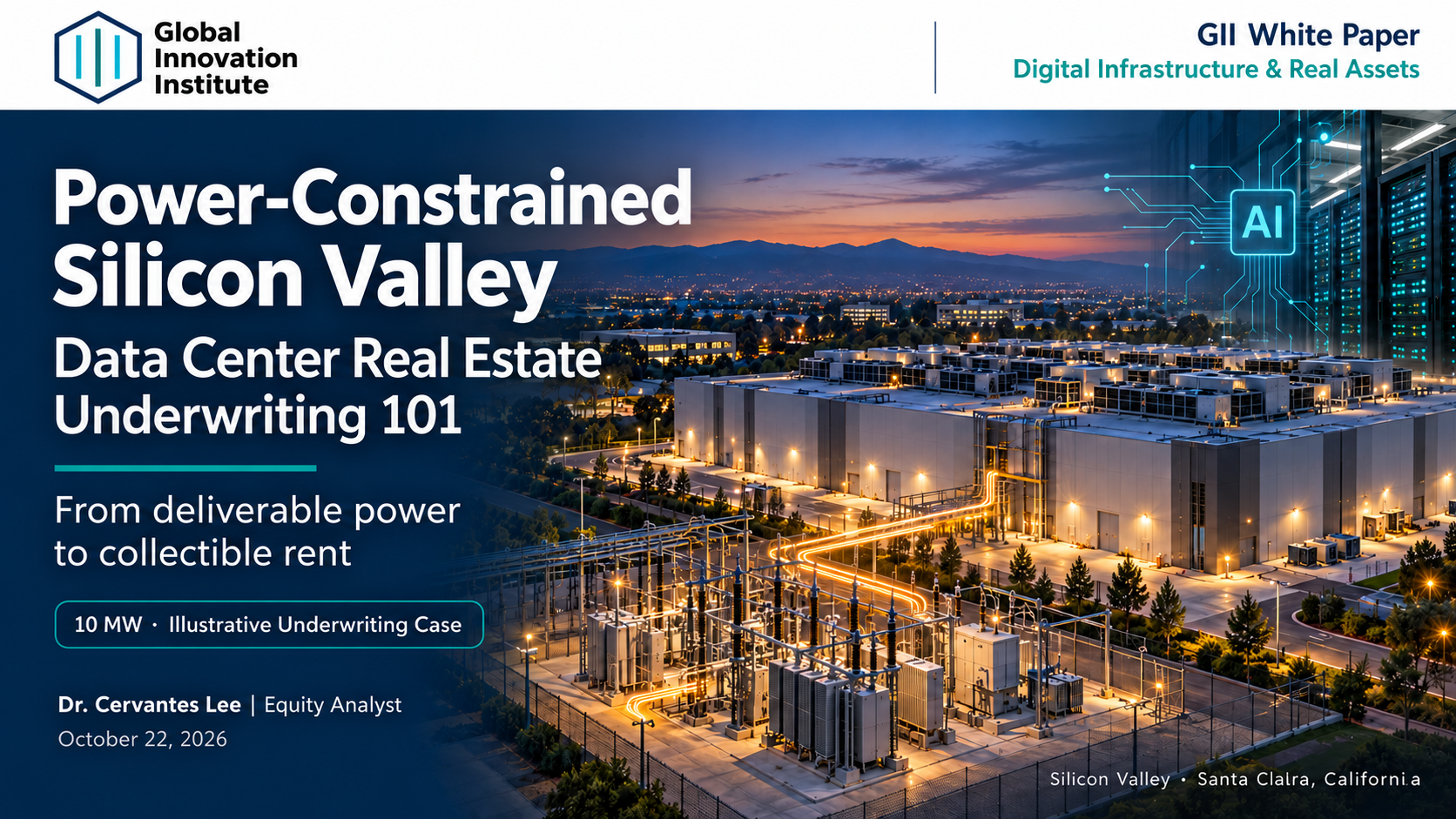
An investment-oriented study of a hypothetical 10 MW Silicon Valley data center, following site selection, utility readiness, development costs, construction financing, leasing, tenant credit, cash flow, and terminal value.
Assess site selection, utility access, and the gap between nominal capacity and power that can be delivered.
Follow development costs and construction financing for a hypothetical 10 MW data center.
Connect lease cash flows, tenant credit, investment returns, and terminal value in one framework.
The release includes the 72-page research white paper, 37-page model booklet, and companion Excel financial model.
Files are hosted in the official GII Research Note No. 2 release archive.
This study uses a hypothetical 10 MW Silicon Valley data center. It does not represent a specific property, tenant, financing commitment, or offer to transact.